


About Reu
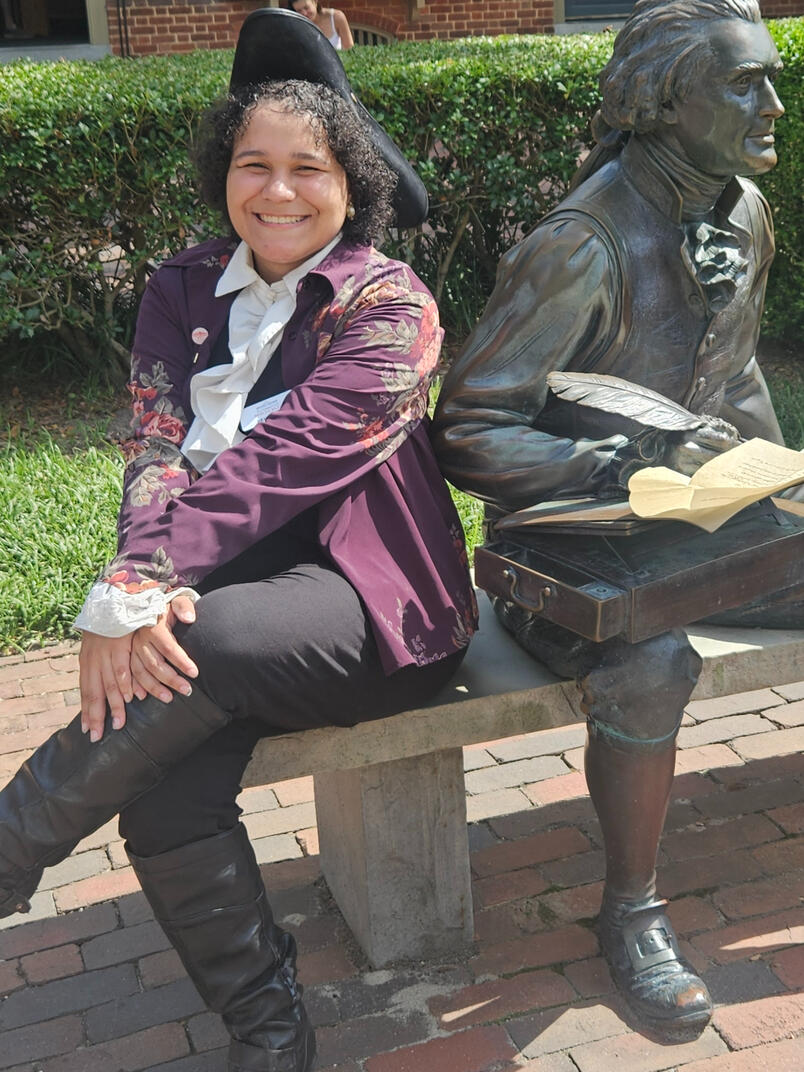
Reuben is a third year student at the University of Virginia double majoring in history and studio art, and minoring in art history. His historical interests surround the US founding era, its figures, and its legacies.
He is a historical interpreter at Monticello and a tour guide in UVA's student led Virginia Guide Service. His personal research projects pertain to the university's history and various 1770's-1830's US figures.
Reuben primarily works with traditional, flat media in their artwork, and often focuses on historical individuals and themes in his work.
Commission Info
Paypal, Venmo, and Cashapp accepted! If you would like to commission me, please email me or DM at any of my socials!
| Standard / Digital |
For commissions done on standard sized paper with non-wet media (marker, colored pencil, etc), or done digitally.
| .............. | Bust | Torso | Full |
|---|---|---|---|
| Sketch | $2.00 | $4.00 | $8.00 |
| Lined | $10.00 | $15.00 | $20.00 |
| Colored | $10.00 | $20.00 | $30.00 |
| Paintings/Portraits |
For commissions done on canvas with paint (gouche, watercolor, and/or acrylic). Other mediums may be used.Small: Start at $15.00
Medium: Start at $30.00
Large: Start at $50.00
Flat/Simple Background - no extra
Complex Background/Scene - plus 50% of base price
Additional Character - plus 50% of base price
Will do :) - humans, ponies/horse-like characters, mild gore, fanart, animals (I'm not the best with animals but I'll try)
Won't do :( - alt-right themes, pedophilia, NSFW, self-harm themes, things that are not in my range of skill (mecha, very complex armory, extremely complex details/scenes, cars)
Examples of my art can be found in my portfolio!
Browse by...
Theme

Historical

Personal

Fan works


Material

Traditional media

Sculpture & Performance

Digital media


Historical Works

An Evening at King's Arms, 2025

"Even in death,
you give life.", 2024
Autumn Read, 2024

Serene, While This Lasts., 2025

Bare Branches and Crimson Snow,
2025
To Our Union!, 2024

Sally Hemings, 2025

A.B on oil, 2024

Independence, freedom,
for all, 2025
A Fragmented, Damaged
Truth., 2025
John Pierre
Burr, 2025


Personal Works

"Universe, for as
cruel as you are,
you were too kind
to me.", 2023
An Offering To
My Past, 2025
Composing What
I Am, 2024
2025

2023

2023

2023

It's still you, 2025

2024

2023


Fan Works

🎀𑁍, 2024

Kikuo inspired Miku, 2023

Untitled

Untitled

Untitled

Untitled

Untitled

Untitled


Traditional Works

To Our Union!, 2025

Untitled
Untitled
Untitled

Untitled
To Our Union!, 2025
Untitled

Untitled


Digital Works
I don't do digital art that often, but I thought I would include a little section that will hopefully grow :)

John Witherspoon and
Aaron Burr Sr., 2025
Reu and friend, 2025

Meriwether Lewis &
The Blue Ridge, 2025
2025
2024

Ellen Wayles Coolidge and the East
Portico (rough), 2025
2024

2025

2023

2023

2022

2022


Sculpture and Performance Art

Seals!?

Untitled

Untitled

2022

It's Like Trying To Make
Sense of Some Kind of
Spectacle, 2025
2022


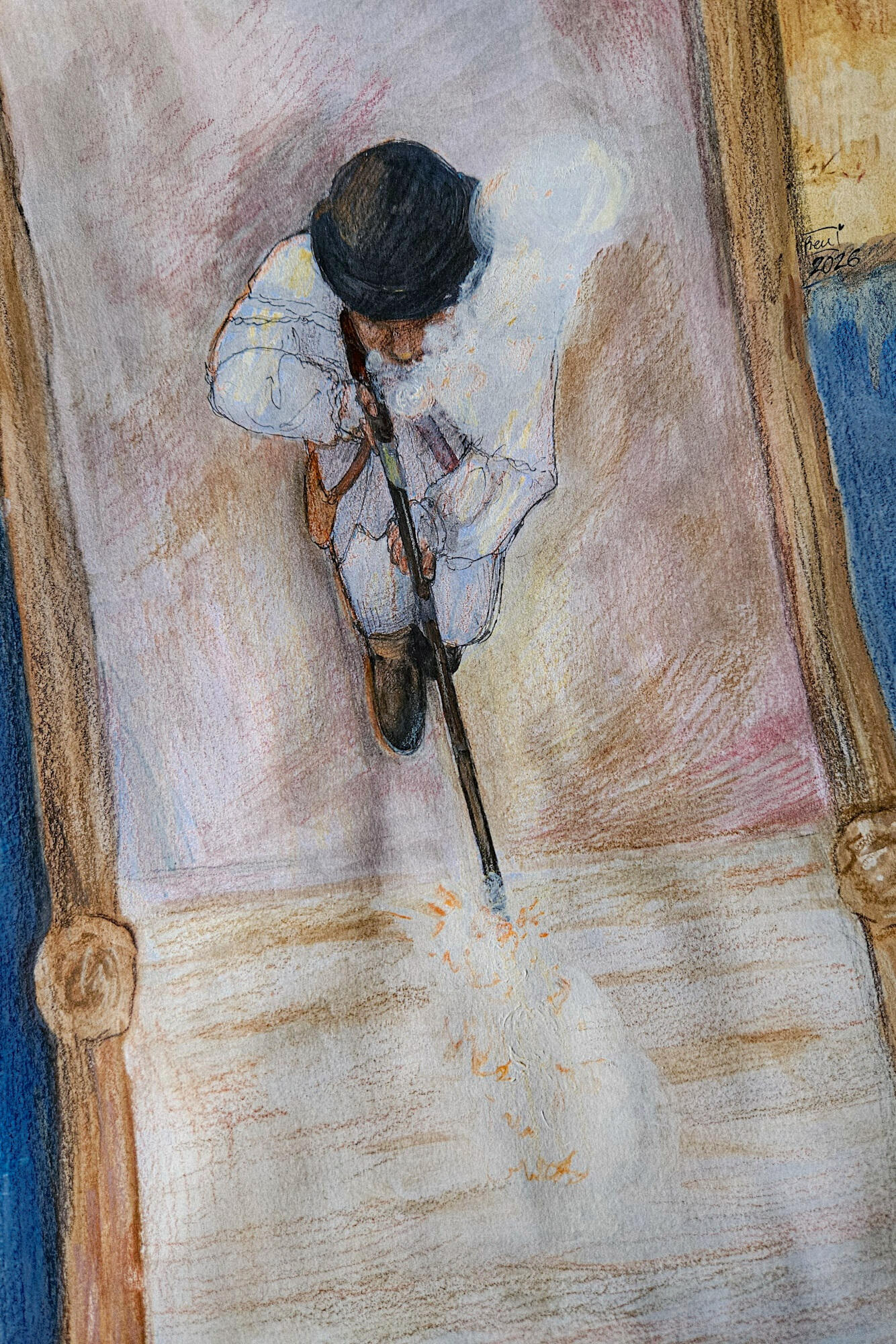
AmRev 250 no. 1 — William Flora
Throughout 2026, I will be drawing a series of various American Revolution figures, events, and battles. The purpose of this project is to illustrate the many lived perspectives and experiences of people 250 years ago, and the importance of confronting the whole story: the good, the bad, the inspiring, and the tragic.First in this series is William Flora! Flora was a free Black man who went on to serve in a Virginia militia during the American Revolution, siding with the Patriots. During the revolution, many free and enslaved Black people chose to support the British due to various promises of better treatment and, if fortunate, freedom. Flora's reasoning for choosing the Patriot side is unknown, and he fought in the American Revolutionary War for at least three years. During his service, he became most known and respected for his defense of Fort Murray in the Battle of Great Bridge (December 9th, 1775). During the battle, Flora remained as the last sentinel on one of the final defensive fronts, even as British troops quickly approached. He would also serve in other famous battles such as the Battles of Brandywine, Monmouth, and Yorktown.After the war, Flora purchased land in Portsmouth, Virginia, becoming one of the first free Black people in the state to own town property. He remained a respected member of the community and owned a successful business up until his passing in 1819.Flora is one of the many people of color that participated in the American Revolution, succeeding and embracing ideas of freedom with immense courage.
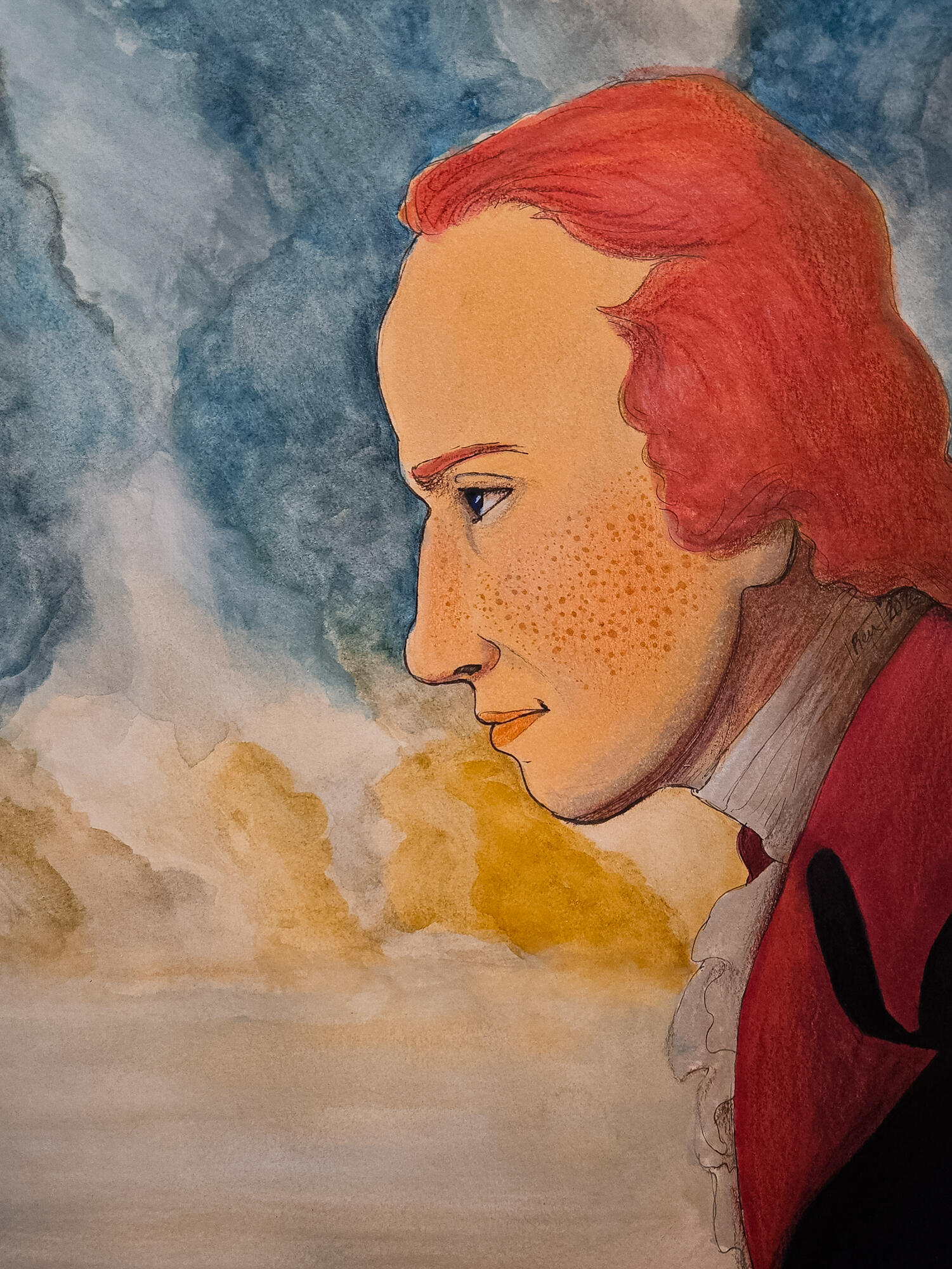
AmRev 250 no. 2 — Alexander HamiltonFirst secretary of the U.S. Treasury, military leader in the Continental Army, accomplished lawyer and Broadway famous. Alexander Hamilton needs little introduction, and as January 11th is his birthday, I determined he would be next in this series.During the American Revolutionary War, Hamilton fought in several key battles, such as the battles of Trenton, Princeton, and Yorktown. I've tried to picture him in Princeton, which took place in January of 1777, though it could be interpreted as any barren backdrop.The fun thing about his birthday is that he was either born in 1755 or 1757 – records are unreliable, historians are uncertain, and perhaps we'll never know how old he actually was. At the very least, people are mostly certain on that Jan. 11th day.Hamilton was known for being deeply opinionated, ambitious, and stubborn, and prolific. There was rarely a dull moment in Hamilton's life, and for both good and bad, he deeply impacted the early U.S.Further reading: Alexander Hamilton by Forrest McDonald; Alexander Hamilton, American by Richard Brookhiser
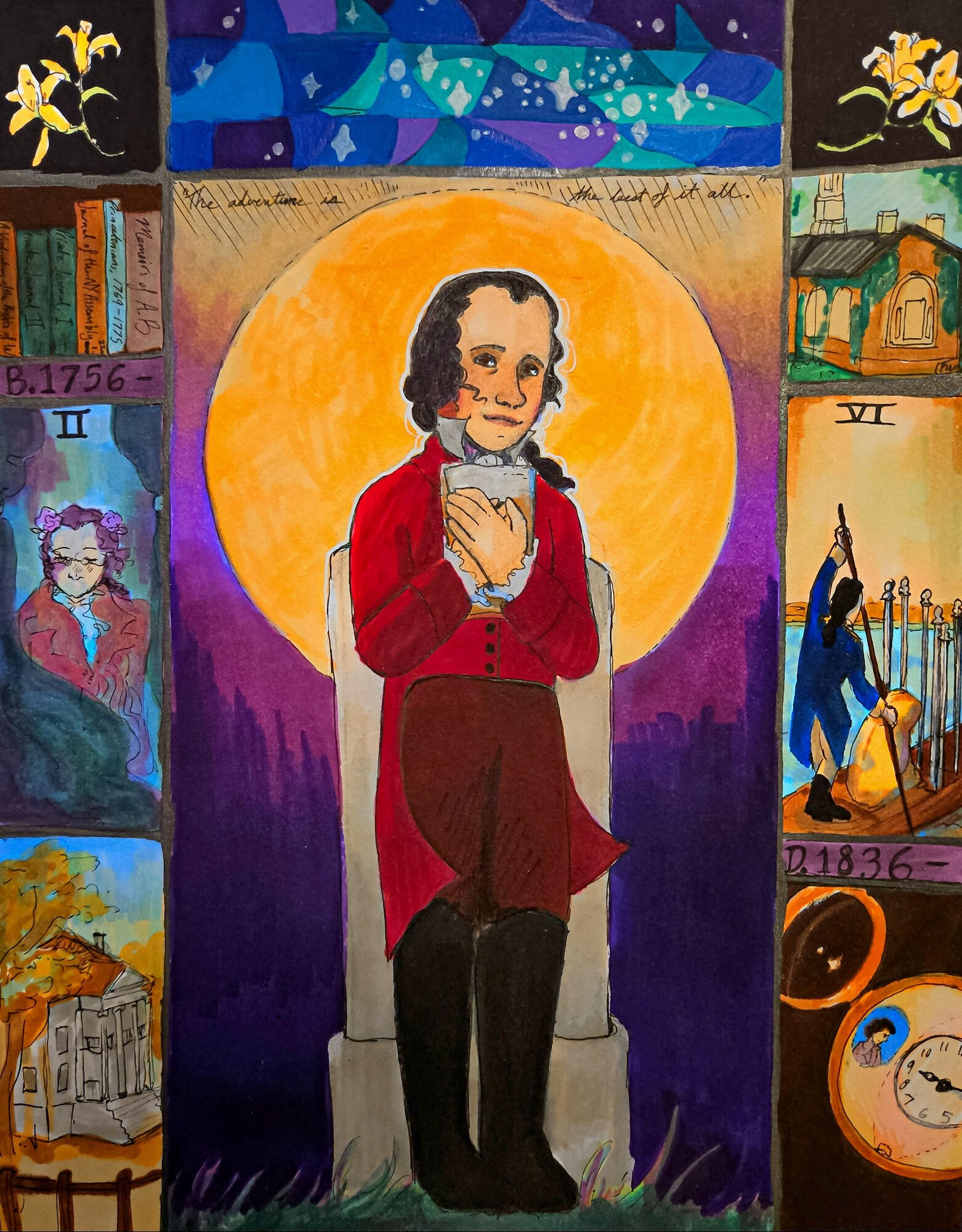
AmRev no. 3 — Aaron Burr Jr.
The third installation for my year-long series. My 7th year drawing him on his birthday. Happy 270th birthday, Aaron Burr.Ironically, I study him the most yet initially had the least to say of him. Aaron Burr is a historical figure who did so much in his life, is misconstrued so often, and sometimes sounds so baffling. Burr was born on February 6th, 1756 in Newark, NJ. He graduated from the College of New Jersey (now Princeton University) when he was 16, and eventually became a Colonel during the American Revolution, participating in various battles such as Quebec and Monmouth.Burr's life holds a lot of legacies. Lawyer, politician, advocate for education, the arts, and immigration among many things. Consistently anti-slavery in politics, though enslaving around 15 people throughout his lifetime. Many adopted and some biological children, and one who gave generously to people in his private life. Irrational yet logical, tragic yet optimistic.“I leave to my actions to speak for themselves, and to my character to confound the fictions of slander.” - A.BIf a majority of his archives weren't in the ocean or lost to time, perhaps we'd all be able to make more sense of him. Perhaps we would know of his actions to better judge his character."Perhaps. As Washington Irving said of Burr, shortly before the essayist died, “Burr was full of petty mystery. He made a mystery of everything.”" - Peter Charles Hoffer, The Treason Trials of Aaron Burr, p. 193.